
MindShift Learn
Understand Your Stress Signature
Your Stress Signature is the personal pattern of physical, mental, emotional, and behavioral changes you tend to experience under stress.
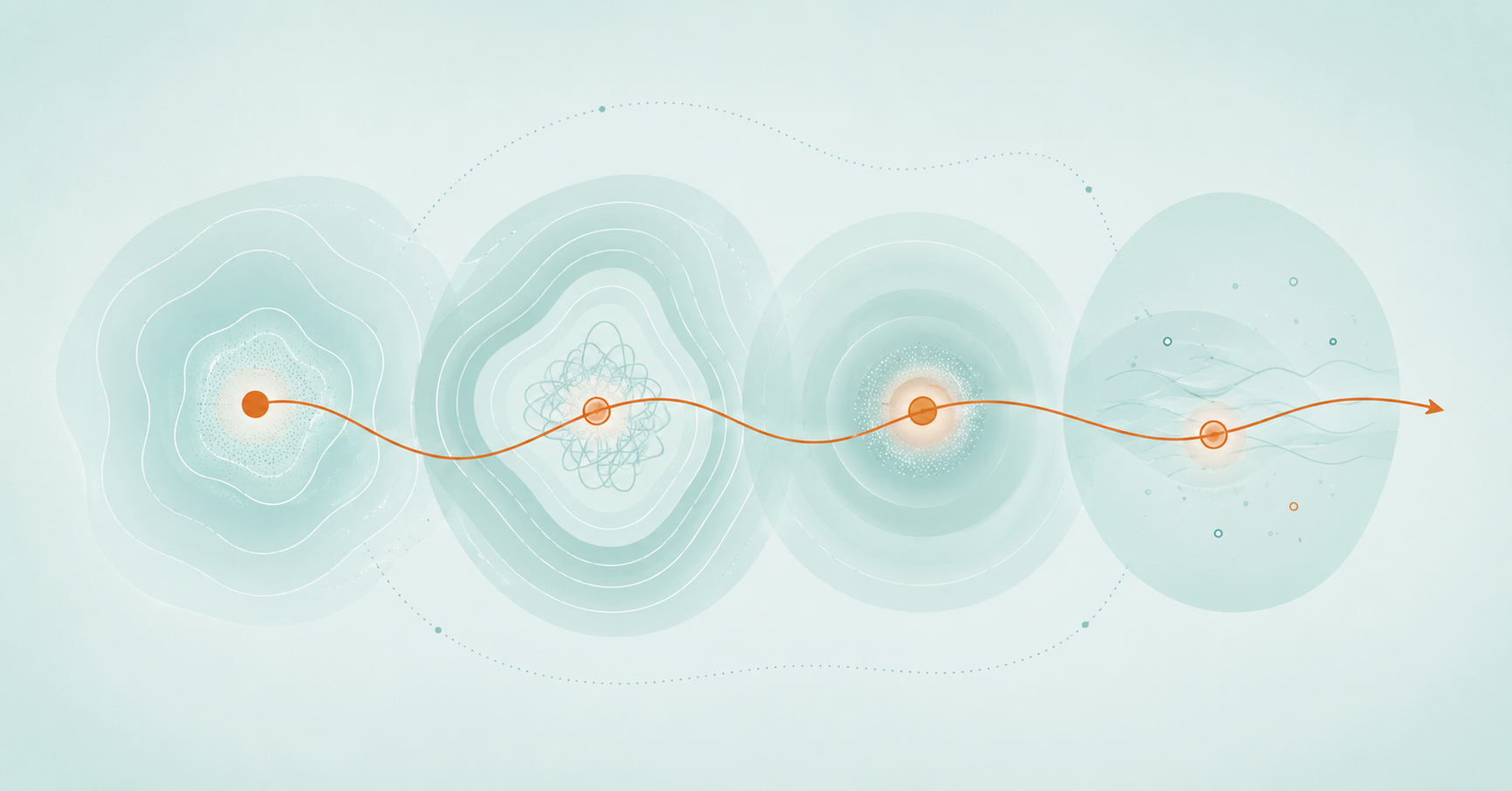
Stress does not look the same for everyone
One person may become restless and talk quickly. Another may go quiet and have trouble making decisions. Someone else may feel stress first as a headache, tight jaw, upset stomach, or racing thoughts.
Your Stress Signature is the pattern of changes you tend to experience when you are under stress.
MindShift uses Stress Signature as a practical self-awareness framework—not as a diagnosis or clinical assessment. It helps you notice how stress commonly appears in your body, thoughts, emotions, and behavior so you can respond before it becomes overwhelming.
Research supports the broader idea behind this framework: people can differ substantially in their biological, emotional, and behavioral responses to the same kind of stressor.
The four parts of a Stress Signature
Your pattern may include signals from several areas at once.
Mental signals: What happens in your thoughts?
You might experience:
- Racing thoughts
- Difficulty concentrating
- Brain fog
- Overanalyzing
- Catastrophizing
- Indecisiveness
- Forgetfulness
- Negative self-talk
- All-or-nothing thinking
- Replaying conversations
- Imagining worst-case scenarios
Sometimes the first sign of stress is not a strong emotion. It is suddenly being unable to organize your thoughts or decide what to do next.
Physical signals: What happens in your body?
You might notice:
- Tight shoulders or neck
- A clenched jaw
- Shallow or rapid breathing
- A faster heartbeat
- Tightness in your chest or stomach
- Headaches
- Shakiness or sweating
- Cold hands
- Digestive changes
- Difficulty sleeping
- Fatigue
These sensations are real, but they are not automatically proof that stress is the cause. New, severe, or concerning physical symptoms should not be assumed to be “just stress.”
Emotional signals: How do you feel?
Stress may feel like:
- Anxiety
- Irritability
- Anger
- Frustration
- Overwhelm
- Restlessness
- Sadness
- Guilt or shame
- Impatience
- Feeling easily startled
- Feeling numb, flat, or disconnected
A stress response does not always look visibly distressed. Emotional shutdown can be part of someone’s pattern too.
Behavioral signals: What do you do—or stop doing?
You might:
- Procrastinate
- Overwork
- Withdraw socially
- Cancel plans
- Rush through tasks
- Snap at others
- Talk more—or become very quiet
- Recheck things repeatedly
- Avoid decisions
- Scroll on your phone
- Change your eating habits
- Use more caffeine, nicotine, alcohol, or other substances
Behavioral signs are often easier to recognize after the moment has passed.
You may think:
“I always start checking everything three times when I’m overwhelmed.”
Or:
“When I stop answering messages, I’m usually nearing my limit.”
Early signs and later signs
Your Stress Signature may unfold in stages.
An early sign might be subtle:
- Holding your breath
- Tightening your jaw
- Becoming impatient
- Reading the same sentence repeatedly
- Reaching for your phone
- Feeling an urge to rush
Later, the pattern might become more intense:
- Spiraling thoughts
- Shutting down
- Snapping at someone
- Feeling unable to make a decision
- Avoiding the situation entirely
The earlier you recognize your pattern, the more options you may have. You are not waiting until you are completely overwhelmed before trying to intervene.
How to identify your Stress Signature
1. Notice your body
Ask:
- Where do I feel stress first?
- What happens to my breathing?
- Which muscles tighten?
- Do I feel restless, heavy, hot, cold, shaky, or numb?
Try to notice without immediately trying to change anything.
2. Observe your thoughts
Ask:
- What starts repeating in my mind?
- Do I expect the worst?
- Does my thinking speed up or go blank?
- Do I become critical of myself or other people?
- Which decisions suddenly feel harder?
3. Name your emotions
Ask:
- What am I feeling beneath the general word “stressed”?
- Is it fear, frustration, anger, embarrassment, sadness, pressure, or uncertainty?
- Do I feel activated—or shut down?
Naming an emotion is not the same as solving it.
Laboratory research suggests that putting feelings into words can change emotional processing and may reduce aspects of emotional reactivity.
4. Track what you do next
Ask:
- Do I speed up, freeze, avoid, control, withdraw, or seek reassurance?
- What do I reach for automatically?
- How does my communication change?
- What helpful activities do I stop doing?
5. Look for patterns across situations
A single stressful moment may not reveal much. Over time, notice what repeats.
You might record:
- The trigger
- Your first physical signal
- Your first thought
- The emotion you noticed
- What you did next
- What you tried
- Whether it helped, did nothing, or made things worse
An example Stress Signature
Imagine you receive a message asking you to join an unexpected meeting.
Your pattern might look like this:
- Trigger: An unexplained meeting request
- Physical: Your stomach tightens and your breathing becomes shallow
- Mental: “Something is wrong. I must have made a mistake.”
- Emotional: Anxiety and embarrassment
- Behavioral: Rechecking recent work and avoiding asking for context
Once you recognize that pattern, you have more choices.
You might ground yourself in what you actually know, take a few slower breaths, name the anxiety, and ask for an agenda instead of spending an hour imagining the worst.
Your Stress Signature does not tell you which response is “correct.” It gives you information.
Your signature can change
Your response may vary based on:
- The type of stressor
- How much sleep you have had
- Whether you feel supported
- Your physical health
- Previous experiences
- How much stress has already accumulated
- Whether the situation feels controllable
Your goal is not to place yourself in a permanent category. It is to become more familiar with your patterns while remaining open to what is happening now.
From self-awareness to action
Knowing your Stress Signature helps MindShift answer a more useful question than:
“How stressed are you?”
It helps you ask:
“What is happening in me right now—and what kind of support might fit?”
You may need Stillness when your attention feels scattered or overstimulated.
You may need Movement when your body feels restless, tense, or stuck.
You may need Expression when thoughts or emotions feel bottled up, repetitive, or difficult to name.
There is no perfect match every time. The purpose is to make a thoughtful first choice, notice the result, and adjust.